Every company worth its salt tries to develop its supply chain visibility as best as it can. They may call this visibility using different terms such as ” 6/6 vision” or “360-degree visibility” or “holistic view”. However, the bottom-line motivation to develop this visibility is to keep their factories running as per forecasted plan (supported by inbound supply chain) and meet the customer commitments (supported by outbound supply chain).
Supply chain solution and tool providers clamor that they have the best Early Warning Systems (EWS) that will help companies reduce the risk of disruption of supply chain and develop the much-needed RESILIENCE in their supply chain.
Did any of the above EWS or tool predict the risk due to COVID 19 pandemic? Covid-19, for example, vividly revealed the vulnerabilities baked into lean, cost-optimized supply chains. Covid-19 came and hit us hard, and after some 6-12 months, most of the companies have developed coping mechanisms to sustain their supply chains. As if that was not enough, many companies are now battling with the vulnerabilities from COVID Wave 2.
Esp. in India when Industrial oxygen capacity is being diverted to health sector, thereby disrupting the supply chain once again.
But did anyone, tools, method, EWS predict supply chain risk or disruption coming from Suez Canal blockage. I bet none.
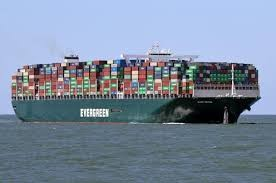
The Ever Given, the 400 meters long massive container ship (~ the size of Empire State Building), on its journey from China to Rotterdam, got horizontally wedged in the Suez Canal blocking off all traffic on 23rd May 2021 due to poor visibility and high winds from a sandstorm.
Around 12% of global trade flows through the Suez Canal and approximately $9 billion worth of goods passes through the 120-mile waterway each day, translating to around $400 million per hour. After disrupting the supply chain for 1 week Ever Green was dislodged safely, on 29th Mar 2021,. The impact from this shutdown of one of the world’s busiest waterways will reverberate through supply chains from several months.
Who could have foreseen that blockage happening? Why the EWS failed to alert the organizations on time? The truth of the matter is that it is impossible to plan or deploy accurate EWS to predict those scenarios.
Depending on tool, systems or EWS may be deemed necessary, but they are not enough to manage the supply chain risks. And it is NOT necessary for plan for such low frequency high impact scenarios (or Black Swan Events).
The deal is to make the supply chain planning FLEXIBLE enough. The Supply chain strategist should think of such scenarios is a broader sense, like what happens when inbound shipments or outbound shipments gets disrupted or what happens there is a massive production disruption, etc.
Companies must build rock solid monitoring and supplier mapping capabilities — down to the sub-tier, site and part level — so they are able to capture the complete picture of how any evolving crisis could affect their supply chains. This will help these companies act if disruption hits and their EWS fails to alert them on time.
Along with EWS and market intelligence, the companies should continuously keep a close watch on developments that can impact the flow of goods, they should also have experts across different commodity/categories, who can help them prepare early on for potential constraints. Example, do they have process experts who can quickly suggest alternate method to use when oxy cutting process is constrained because of COVID Wave 2 induced oxygen shortages in India.
A wide range of materials goes into a single product, and it’s important to know where those materials come from. Mapping only one or two categories or
Tier One suppliers is not sufficient. Companies need to work extra hard to develop this visibility across all tiers during normal time and not when their EWS warns or fail to warn them.
In the case of the ongoing semiconductor shortage, the carmakers’ inability to get a $5 chip from a Tier Three supplier derailed the entire automotive industry.
And this can happen only when the organization prioritizes developing supply chain visibility across all tiers as part of their supply chain strategy. When they take that extra effort to collaborate with internal stakeholders who may have conflicting priorities (or KPIs). When they prioritize allocating time and resources to make this happen NOW and not when things settle down.
As they say in military, “The more you sweat in peace, the less you bleed in war.”
Let them take the leaf from the Suez Canal issue and take a plunge now, to develop the necessary visibility across all tiers, develop flexibility in their supply chain by collaborating effectively with all stakeholders. Then only companies can ensure minimum impact on supply chain when such black swan event strikes them. The EWS can now be leveraged for developing the supply-chain-resilience capabilities for the organization.

 By SoumenDe
December 30, 2025
By SoumenDe
December 30, 2025
